
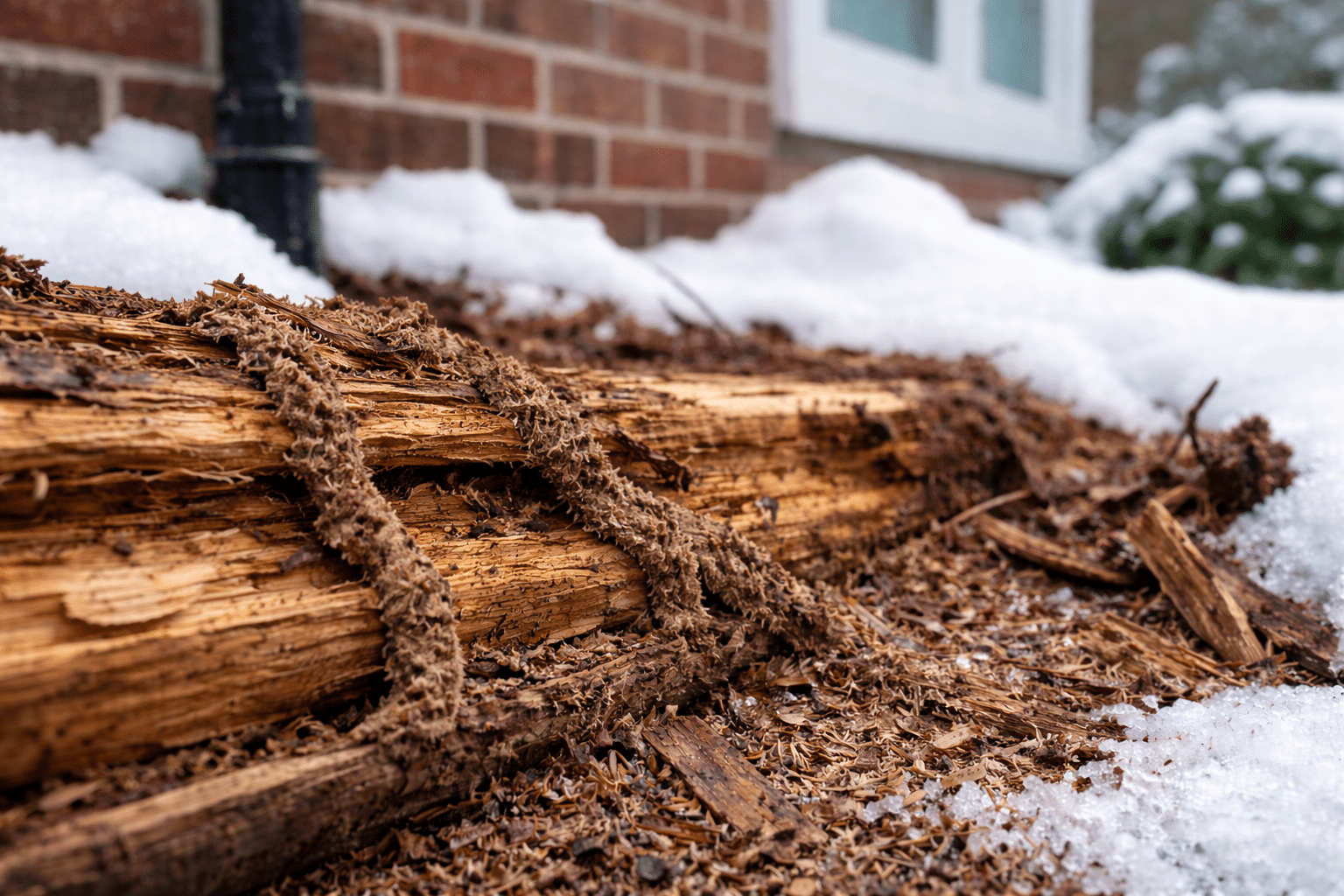
Many homeowners assume termite activity stops once temperatures drop. Cold weather feels like a natural reset, leading people to believe termites disappear until spring. In reality, termites do not go away during winter. Understanding how termites behave in colder months helps homeowners avoid false reassurance and make informed decisions about protecting their homes.
This article explains what happens to termites during winter, why they remain active year round, and what homeowners should understand about winter termite activity in Maryland homes.
Why Termites Do Not Disappear in Cold Weather?
Termites are sensitive to temperature, but they are also highly adaptive. When outdoor temperatures fall, termites do not die off or leave the area. Instead, they adjust their behavior to survive colder conditions.
Homes provide a stable environment with warmth, shelter, and food sources. Once termites gain access to a structure, seasonal temperature changes outside have little effect on their ability to continue feeding.
How Termites Survive Winter Months?
Subterranean termites, the most common type found in Maryland, live below ground and build tunnel systems that protect them from temperature extremes. During winter, these termites move deeper into the soil where temperatures remain more consistent.
If termites already have access to a home’s structure, they can continue feeding within wall cavities, basements, and crawlspaces regardless of outdoor weather.
Why Winter Can Be a Hidden Risk for Homeowners
Winter termite activity often goes unnoticed because the signs homeowners associate with termites are more visible during warmer months. Swarming usually occurs in spring, but the absence of swarmers does not mean termites are inactive.
Because winter activity happens out of sight, damage can continue without obvious warning signs until warmer conditions return.
Common Winter Conditions That Attract Termites
Certain winter conditions can increase termite risk even when temperatures are low.
- Moisture around foundations from snowmelt or winter rain
- Wood to soil contact that stays damp
- Basements and crawlspaces with limited airflow
- Stored firewood or debris placed close to the home
These conditions provide the moisture and shelter termites need to remain active.
What Is Normal and What Deserves Attention?
Not every winter observation signals a termite problem, but some signs warrant closer attention.
Often normal during winter
- No visible termite activity above ground
- Lack of swarming insects
Worth closer attention
- Soft or damaged wood
- Mud tubes along foundation walls
- Doors or windows becoming difficult to open
- Persistent moisture near structural wood
Recognizing these signs early can help prevent long term damage.
Maryland Homes and Winter Termite Activity
Many Maryland homes include basements, crawlspaces, and older construction features that increase exposure to moisture year round. Aging foundations, inconsistent insulation, and untreated wood can all contribute to ongoing termite risk during winter months.
Local experience helps place winter termite behavior into the context of Maryland’s climate and housing styles.
Why Experience Matters When Evaluating Termite Risk?
Years of treating homes throughout Maryland show that termite issues rarely start suddenly. They develop slowly over time, often long before homeowners notice a problem. Winter conditions do not stop this process.
Understanding seasonal termite behavior allows homeowners to stay proactive instead of relying on assumptions based on temperature alone.
Planning Ahead as a Homeowner
Winter is a good time to evaluate conditions that may contribute to termite activity. Addressing moisture issues, improving drainage, and maintaining clear space around the foundation can reduce risk before spring arrives.
If you are unsure about your home’s exposure, an experienced pest professional can help explain what to look for and which steps make sense for your property.
Final Thoughts
Termites do not go away in winter. While activity may be less visible, the potential for damage remains. Understanding winter termite behavior helps homeowners make informed decisions and avoid unexpected problems later in the year.

