
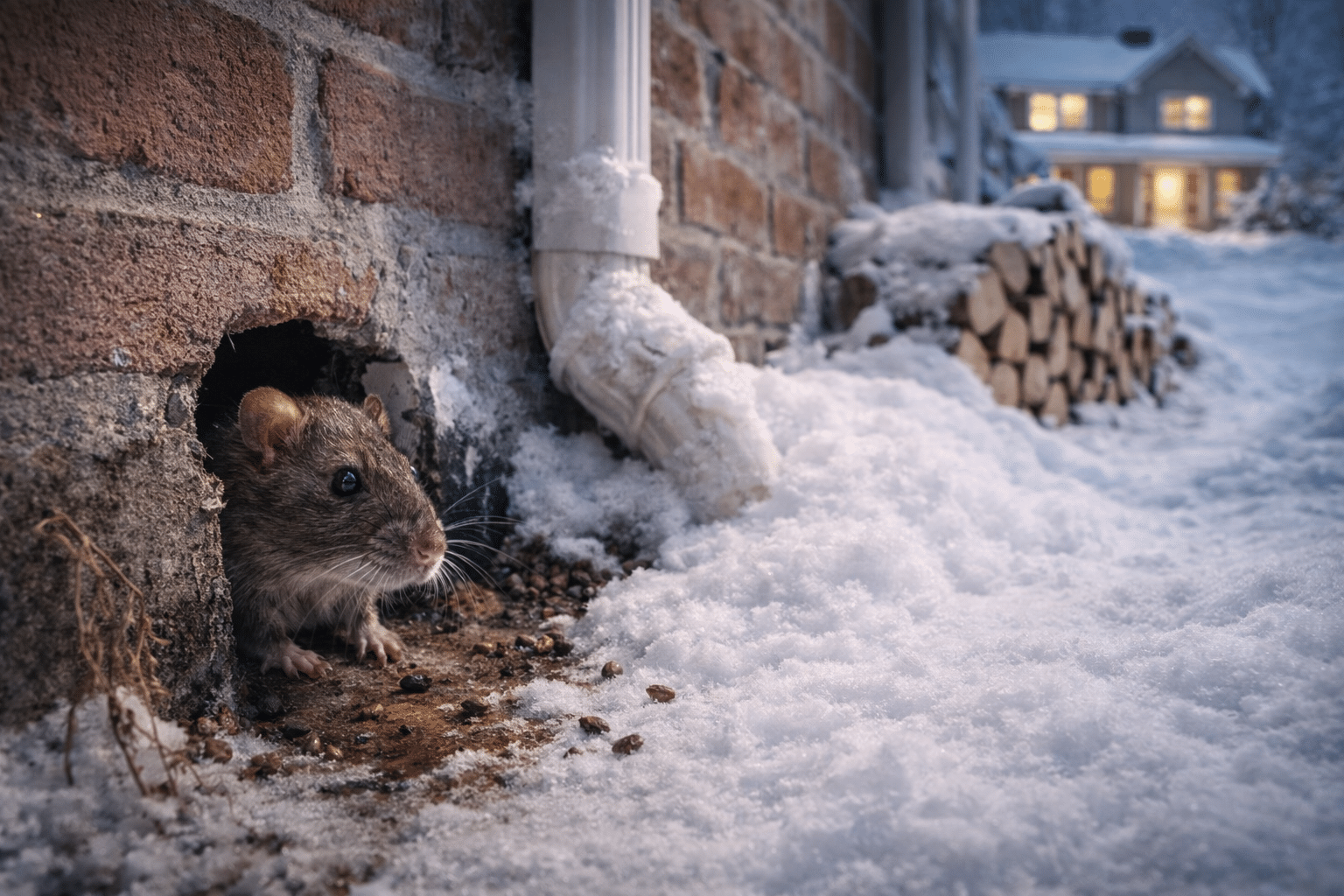
When temperatures drop, many homeowners assume pest activity slows down. Rodents behave differently. Cold weather often drives rodents to seek warmth, shelter, and food inside homes, making winter one of the most common times for indoor rodent activity. Understanding how and why rodents behave this way helps homeowners recognize risks early and avoid more disruptive problems later.
This article explains why rodent activity increases during cold weather, where rodents typically enter homes, and what homeowners should watch for during winter months.
Why Rodents Become More Active Indoors in Winter
Rodents are motivated by survival. As outdoor temperatures fall, natural food sources become limited and shelter becomes essential. Homes provide steady warmth, nesting materials, and access to food, making them an ideal environment during winter.
Even small openings can allow rodents to enter and establish nesting areas inside walls, attics, basements, or crawlspaces.
Common Entry Points Rodents Use
Rodents can squeeze through surprisingly small gaps. During inspections and treatments, professionals commonly find entry points such as:
- Gaps around utility pipes or cables
- Cracks in foundation walls
- Openings near garage doors
- Damaged vents or screens
- Gaps along rooflines or soffits
Once inside, rodents may remain hidden while continuing to move through enclosed spaces.
Why Winter Rodent Activity Often Goes Unnoticed
Rodent activity isn’t always obvious at first. In winter, rodents tend to nest in quiet, concealed areas, which makes detection more difficult.
Homeowners may overlook:
- Light scratching or movement sounds
- Small droppings in storage areas
- Chewed insulation or wiring in hidden spaces
Because these signs can be subtle, winter rodent activity may continue for some time before it’s addressed.
Conditions That Increase Winter Rodent Risk
Certain winter conditions can make homes more attractive to rodents:
- Gaps created by freeze-thaw cycles
- Clutter or debris near foundations
- Firewood stored close to the home
- Unsealed attic or crawlspace access points
Reducing these conditions can significantly lower the risk of rodent entry.
What’s Normal and What Needs Attention
Not every winter sound or observation indicates a rodent issue, but some signs should prompt closer attention.
Often normal:
- Occasional outdoor rodent activity
- No visible signs inside the home
Worth closer attention:
- Repeated noises in walls or ceilings
- Droppings or nesting material indoors
- Damage to insulation or wiring
- Persistent odors in enclosed areas
Early awareness helps homeowners address problems before they escalate.
Maryland Homes and Winter Rodent Behavior
Many Maryland homes, especially older properties, include basements, crawlspaces, and attached garages that provide easy access points for rodents. Seasonal weather patterns and older construction details can increase winter vulnerability if sealing and maintenance haven’t been updated.
Local experience helps identify where rodent activity is most likely to occur.
Why Experience Matters in Addressing Rodent Issues
Years of managing rodent activity in Maryland homes show that winter problems often stem from small, overlooked entry points. Experience allows professionals to identify these vulnerabilities and recommend practical solutions tailored to the home.
Rodent issues are best addressed when homeowners understand both the behavior and the contributing conditions.
Planning Ahead as a Homeowner
Winter is an ideal time to inspect your home for potential rodent entry points. Sealing gaps, reducing clutter near the foundation, and maintaining proper ventilation can help limit rodent exposure before spring arrives.
If you’re unsure where rodents may be entering or want guidance on preventative steps, an experienced pest professional can help assess risk and recommend appropriate measures.
Final Thoughts
Rodents don’t slow down in winter, they adapt. Cold weather often drives them indoors, sometimes without obvious warning signs. Understanding winter rodent behavior helps homeowners stay proactive and protect their homes year-round.

