
When homeowners think about termites, spring and summer usually come to mind. Winter often feels like a quiet season. However, moisture conditions that develop during colder months can quietly increase termite risk long before visible activity appears.
Understanding how winter moisture behaves around a home helps homeowners recognize why termite concerns often begin well before warmer weather arrives.
Why Moisture Matters to Termites Year Round
Termites rely on moisture to survive. Even during winter, subterranean termites seek environments where moisture levels remain stable and accessible. While cold temperatures may reduce surface activity, moisture conditions below ground and within protected areas of a home can continue to support colonies.
Winter moisture does not create termites, but it can create conditions that allow them to remain active without obvious signs.
Basements and Foundation Areas
Basements and foundation walls are common areas where winter moisture accumulates. Melting snow, winter precipitation, and seasonal temperature changes can introduce moisture into soil surrounding the foundation.
When moisture remains present near foundation walls, it can increase the likelihood of termite activity in concealed areas where structural wood and soil are close together.
Crawlspaces and Ground Moisture
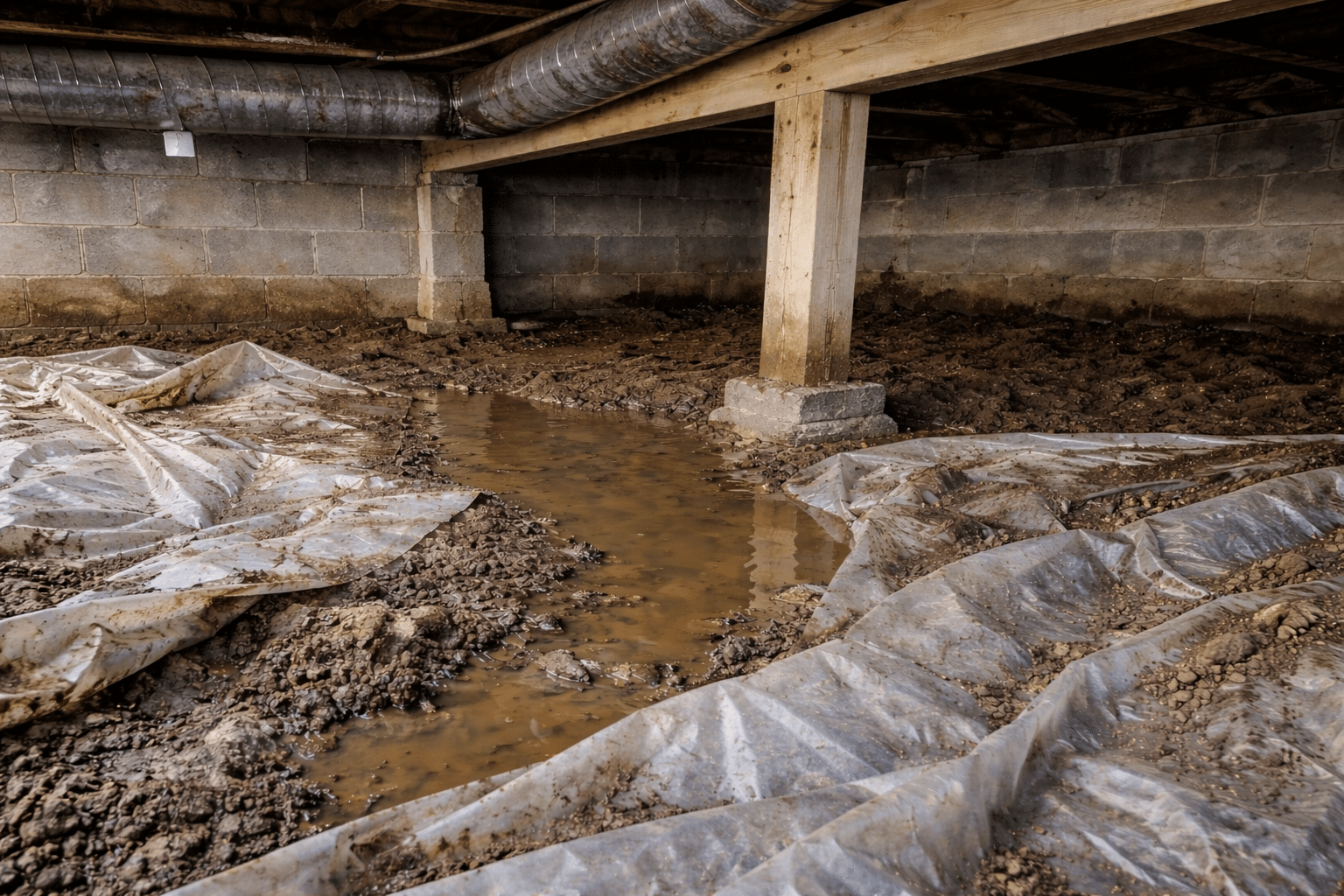
Crawlspaces are especially vulnerable during winter months. Reduced airflow, cooler temperatures, and damp soil can allow moisture to linger longer than expected.
Conditions that may increase termite risk include
Exposed soil without proper vapor barriers
Poor drainage beneath the home
Limited airflow during colder months
Even when activity is not visible, crawlspace moisture can create an environment termites find favorable.
Wood and Soil Contact Points
Winter moisture often highlights areas where wood and soil come into contact. Deck posts, sill plates, and structural components near ground level may retain moisture longer during colder months.
Moist wood in close contact with soil provides both food and shelter for termites, increasing risk without producing obvious warning signs.
Why Winter Moisture Often Goes Unnoticed
During winter, homeowners may spend less time inspecting exterior areas and crawlspaces. Cold conditions and limited daylight can make it easy to overlook moisture related issues.
As a result, moisture conditions that contribute to termite risk may remain unnoticed until termite activity becomes more visible later in the year.
Maryland Homes and Seasonal Moisture Patterns
Maryland’s climate includes winter precipitation, changing temperatures, and varied soil conditions. Many homes in the region feature basements, crawlspaces, or older construction details that influence how moisture behaves around the structure.
Local experience helps identify moisture patterns that commonly contribute to termite risk across different home styles.
Planning Ahead as a Homeowner
Winter is an ideal time to assess moisture management. Addressing drainage, improving airflow, and reducing soil contact can help limit termite exposure before activity increases in spring.
A professional inspection can help identify moisture related conditions that may increase termite risk and guide homeowners toward preventative steps.
Final Thoughts
Termite risk does not disappear in winter. Moisture conditions that develop during colder months often set the stage for future activity. Understanding how winter moisture affects a home allows homeowners to take proactive steps and reduce risk before termites become active and visible.
If moisture conditions are present around your home during winter, a professional termite inspection can help identify potential risk and guide next steps.
Check out our reviews!

