
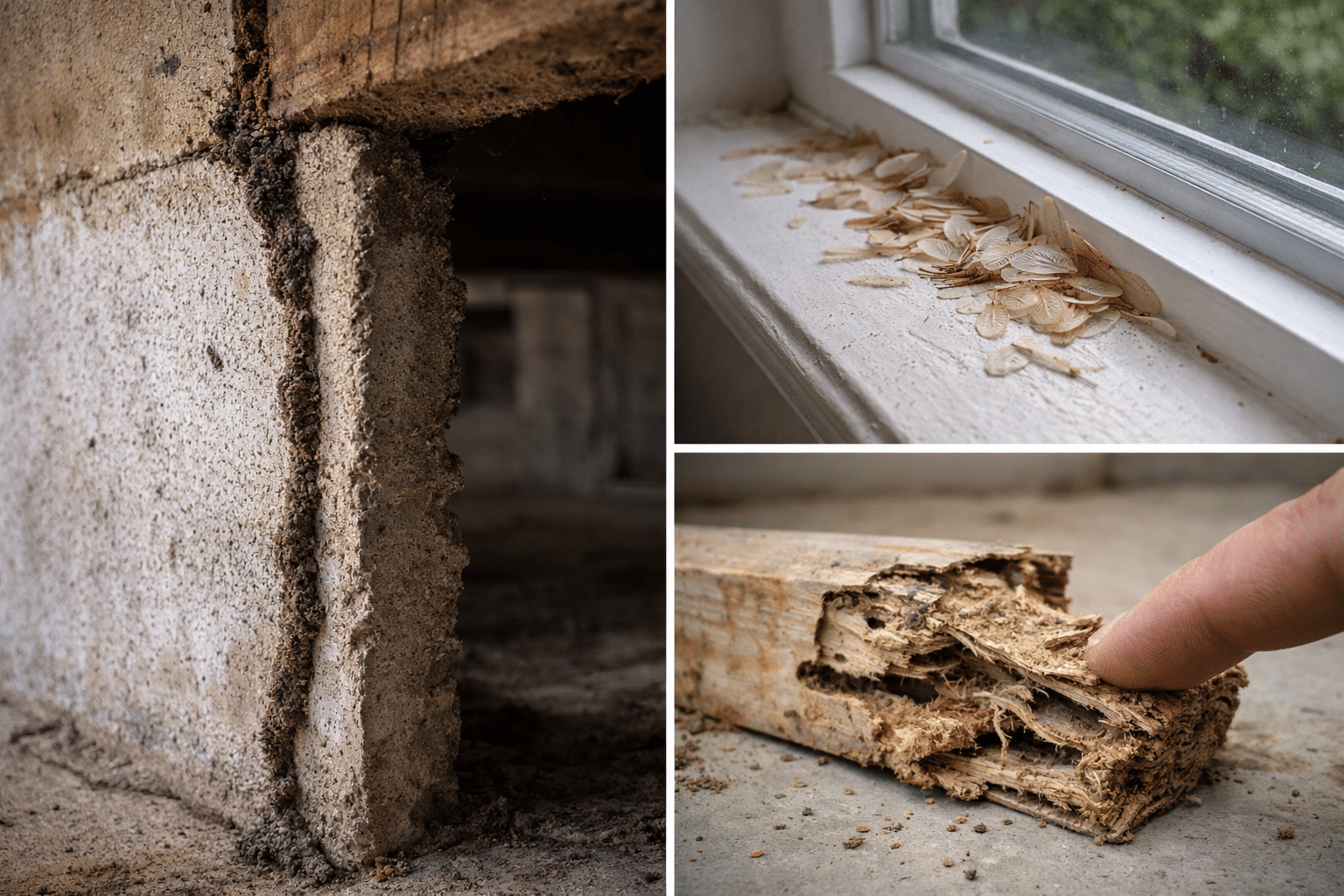
Termite damage rarely begins with something dramatic. In most cases, early activity develops quietly and out of sight. By the time visible damage appears, termites may have already been present for months.
Understanding the subtle warning signs of termite activity helps homeowners address issues early and prevent more extensive structural damage.
Why Early Detection Matters
Termites feed on wood and other cellulose based materials. Because they often remain hidden behind walls, beneath flooring, or inside crawlspaces, early signs can be easy to overlook.
Identifying activity early can significantly reduce repair costs and limit structural impact.
Mud Tubes Along Foundations
One of the most common early signs of subterranean termite activity is the presence of mud tubes. These pencil sized tunnels are typically found along foundation walls, crawlspace supports, or basement surfaces.
Mud tubes allow termites to travel between soil and wood while maintaining moisture and protection from open air.
Homeowners may miss these tubes if they are located behind stored items, inside crawlspaces, or along less visible portions of the foundation.
Subtle Changes in Wood Surfaces
Termite damaged wood often appears normal on the surface while being hollowed from the inside. Early signs may include:
Small blistering or bubbling in paint
Wood that sounds hollow when lightly tapped
Minor sagging in trim or baseboards
Soft spots in flooring
These conditions are frequently mistaken for moisture related issues or normal aging.
Discarded Wings Near Windows or Doors
During swarm season, reproductive termites leave established colonies to form new ones. Homeowners may notice small piles of translucent wings near windows, doors, or light sources.
Because swarmers are often confused with flying ants, this sign is commonly overlooked.
Doors and Windows That Stick
As termites tunnel through structural framing, slight shifts in wood can occur. Doors or windows that suddenly begin sticking without a clear explanation may warrant closer evaluation.
While many factors can cause alignment changes, unexplained sticking combined with other subtle signs may indicate termite activity.
Why Winter Signs Are Often Missed
During colder months, termite activity typically occurs below the surface or inside protected areas. Without visible swarmers or obvious exterior damage, homeowners may assume termite risk is low.
In reality, termites remain active year round in Maryland and can continue feeding inside structures even when outdoor temperatures drop.
Maryland Homes and Termite Risk
Many homes in the greater Baltimore area include crawlspaces, wooden framing in contact with masonry, and aging construction details that can create favorable conditions for termite entry.
Moisture, soil contact, and hidden structural voids all increase vulnerability.
Routine inspections help identify early signs before damage becomes extensive.
When to Seek Professional Evaluation
If you notice mud tubes, discarded wings, hollow sounding wood, or unexplained structural changes, scheduling a professional termite inspection can provide clarity.
Early identification allows for targeted treatment and helps prevent larger structural concerns.
Final Thoughts
Termites do not typically announce their presence. Early signs are subtle and easy to dismiss. Recognizing these warning indicators helps homeowners act before minor activity turns into significant damage.
A proactive approach is the most effective way to protect your home year round.
Check out our reviews!

