
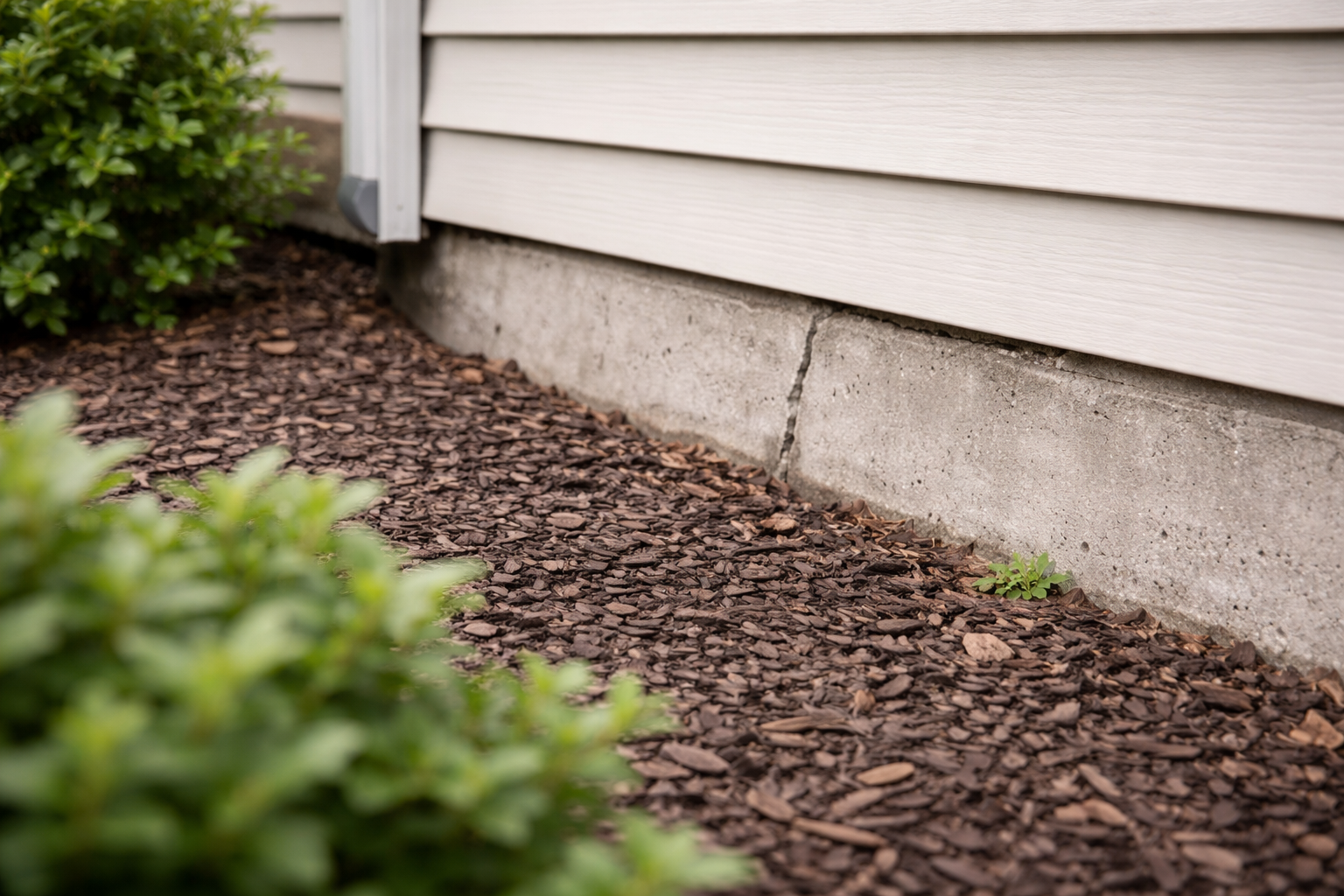
As termite activity increases in early spring across Maryland, one of the most important areas to evaluate around any home is the foundation. Subterranean termites rely on soil contact and concealed pathways to access wood components, and the foundation often provides the most direct route.
Understanding where termites commonly enter a structure helps homeowners stay aware of conditions that may support activity and allows for more informed decisions during inspections.
Why the Foundation Area Matters
Subterranean termites live in the soil and travel between their colony and food sources through protected tunnels. Because of this, the area where the home meets the ground becomes the primary zone of concern.
The foundation provides:
• Consistent moisture levels
• Protection from exposure
• Direct access to structural framing above
Even well constructed homes can have small openings or transitions that termites may use as access points over time.
Expansion Joints and Gaps
Concrete slabs and foundation walls often include expansion joints or natural seams. These areas allow for slight movement in the structure but can also create small gaps.
Common locations include:
• Garage slab joints
• Basement floor seams
• Where additions meet the main structure
• Control joints in poured concrete
These openings are typically narrow and part of normal construction, but they can still serve as pathways from soil to interior spaces.
Utility Penetrations
Homes require multiple utility connections, including water lines, gas lines, and electrical conduits. These lines pass through the foundation and are sealed during construction, but over time, sealants may shrink or separate slightly.
Inspectors often observe:
• Small gaps around pipe penetrations
• Aging or deteriorated sealant
• Areas where soil is in direct contact with utility entry points
Maintaining sealed penetrations helps limit potential access routes.
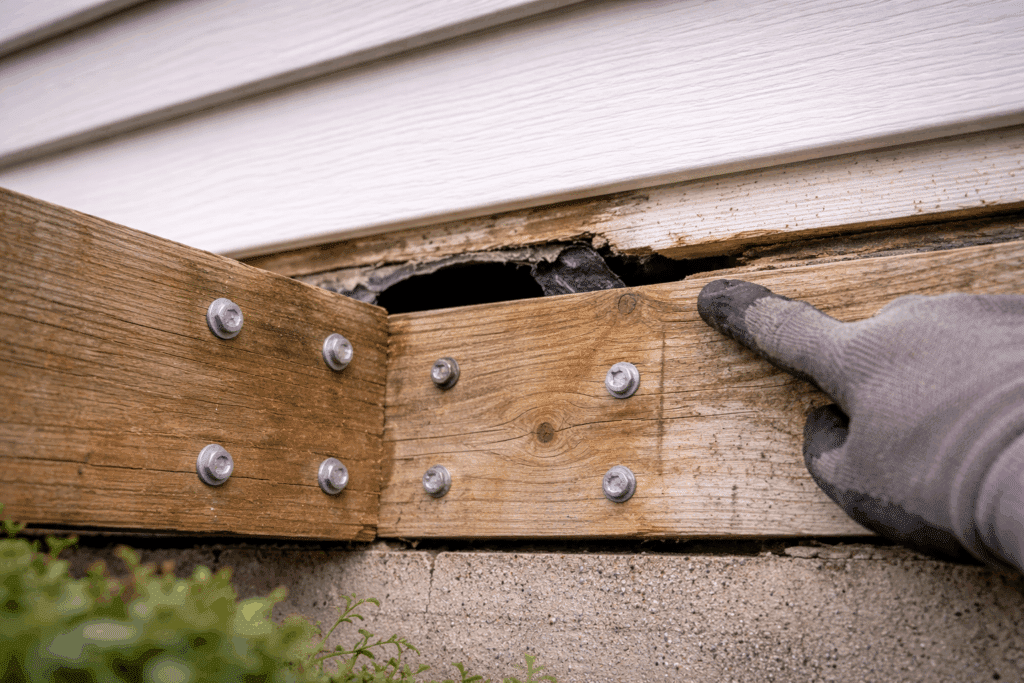
Siding and Soil Contact
One of the most common and preventable conditions involves siding or exterior materials that extend too close to the ground.
When siding, trim, or insulation board makes contact with soil, termites can move directly from the ground into wood components without needing to build visible shelter tubes.
Areas of concern include:
• Low siding clearance
• Mulch built up against exterior walls
• Landscaping that raises soil levels near the structure
Maintaining proper clearance between soil and siding is one of the most effective ways to reduce access.
Cracks in Foundation Walls
Concrete can develop small cracks over time due to normal settling and shrinkage. These cracks are common and not always structural concerns, but they can provide pathways for moisture and insects.
During inspections, we evaluate:
• Width and pattern of cracks
• Whether cracks appear stable
• Signs of soil contact at crack locations
Not all cracks require repair, but they are noted as part of overall foundation condition.
Garage and Entry Points
Garage areas often have multiple transitions between slab, framing, and exterior walls. These transitions can create small gaps that are not always visible without close inspection.
Common locations include:
• Where the garage slab meets the wall
• Door thresholds
• Framing transitions in attached garages
Because garages are often at grade level, they can provide easier access compared to elevated portions of the home.
Why Inspections Focus on These Areas
A termite inspection focuses on identifying conditions that may allow or support termite activity. The presence of an entry point does not mean termites are active, but it does highlight areas that may require monitoring.
Inspectors are looking for:
• Evidence of current or past activity
• Conditions that support access
• Areas where maintenance may be beneficial
This approach provides homeowners with a clear understanding of risk without unnecessary concern.
Supporting Long Term Protection
Reducing access to a home starts with awareness of how termites interact with the structure. Simple steps such as maintaining proper grading, keeping mulch away from siding, and sealing visible gaps can improve overall protection.
In Maryland’s climate, where soil moisture and seasonal changes are consistent, maintaining the foundation area plays an important role in long term structural care.
Check out our reviews!

