

As spring progresses across Maryland, homeowners may begin to notice small flying insects emerging around windows, doors, or exterior areas of the home. These are often referred to as “swarmers,” and they play an important role in the termite life cycle.
Understanding what termite swarmers are, how they behave, and what their presence may indicate can help homeowners better interpret what they are seeing and when it may be appropriate to have an inspection performed.
What Are Termite Swarmers
Termite swarmers are reproductive members of a termite colony. Their primary role is to leave an established colony, mate, and begin the formation of new colonies.
They are typically seen:
• During warmer spring days
• After rainfall or periods of increased moisture
• Around light sources such as windows and doors
Swarmers are not responsible for structural damage themselves. Instead, they are an indication that a mature colony is present nearby.
Why Swarming Occurs in Spring
Swarming is a seasonal behavior that allows termite colonies to expand. In Maryland, this activity often increases in spring due to:
• Rising temperatures
• Increased soil moisture
• Favorable environmental conditions
These factors create an ideal environment for termites to reproduce and establish new colonies.
Where Swarmers Are Commonly Found
Homeowners may notice swarmers both inside and outside the home. Common locations include:
• Near windowsills
• Around exterior doors
• Along foundation walls
• Near light fixtures
In some cases, swarmers may emerge indoors if a colony is located within or directly beneath the structure.
Discarded Wings and What They Indicate
After swarmers emerge and find a place to settle, they shed their wings. One of the most noticeable signs of swarming activity is the presence of small, uniform wings.
These are often found:
• On windowsills
• Near doorways
• Along baseboards
Discarded wings can remain even after the swarmers are no longer visible and are often one of the first signs homeowners notice.
Flying Ants vs Termite Swarmers
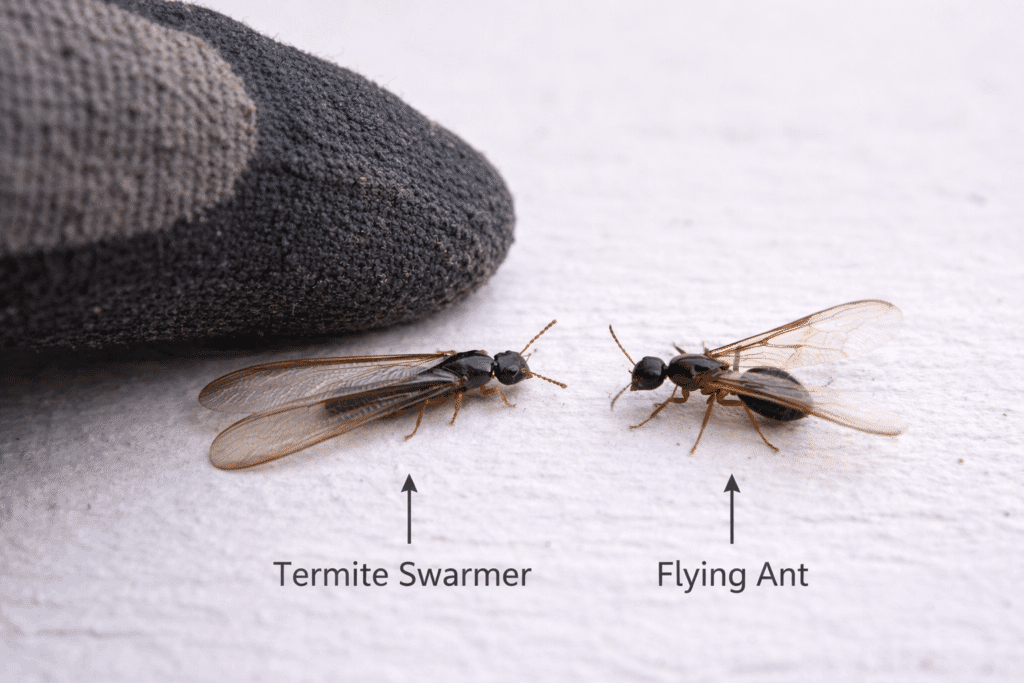
Swarmers are sometimes mistaken for flying ants. While they may appear similar at a glance, there are a few key differences.
Termite swarmers generally have:
• Straight antennae
• Equal length wings
• A more uniform body shape
Flying ants typically have:
• Elbowed antennae
• Uneven wing sizes
• A more defined waist
Accurate identification helps determine whether further evaluation may be necessary.
What Swarm Activity Means for a Home
Seeing swarmers does not always mean that there is active damage within the home. However, it does indicate that termite activity is present in the surrounding environment.
Swarmers may be associated with:
• A nearby outdoor colony
• A colony located beneath the structure
• Conditions that are favorable for termite activity
Because of this, swarm activity is often a reason to consider a professional inspection.
When to Schedule an Inspection
If swarmers or discarded wings are observed, scheduling a termite inspection can help determine whether there is evidence of activity affecting the structure.
An inspection focuses on:
• Identifying signs of current or past termite activity
• Evaluating accessible areas of the home
• Assessing conditions that may support termite presence
This provides homeowners with a clear understanding of the situation without unnecessary assumptions.
Supporting Awareness During Swarm Season
Spring is a natural time for termite activity to become more visible. Staying aware of what swarmers look like and where they are commonly found helps homeowners respond appropriately.
In Maryland’s climate, seasonal changes play a significant role in termite behavior. Recognizing these patterns allows homeowners to better understand what they are seeing and take informed next steps when needed.
Check out our reviews!

