
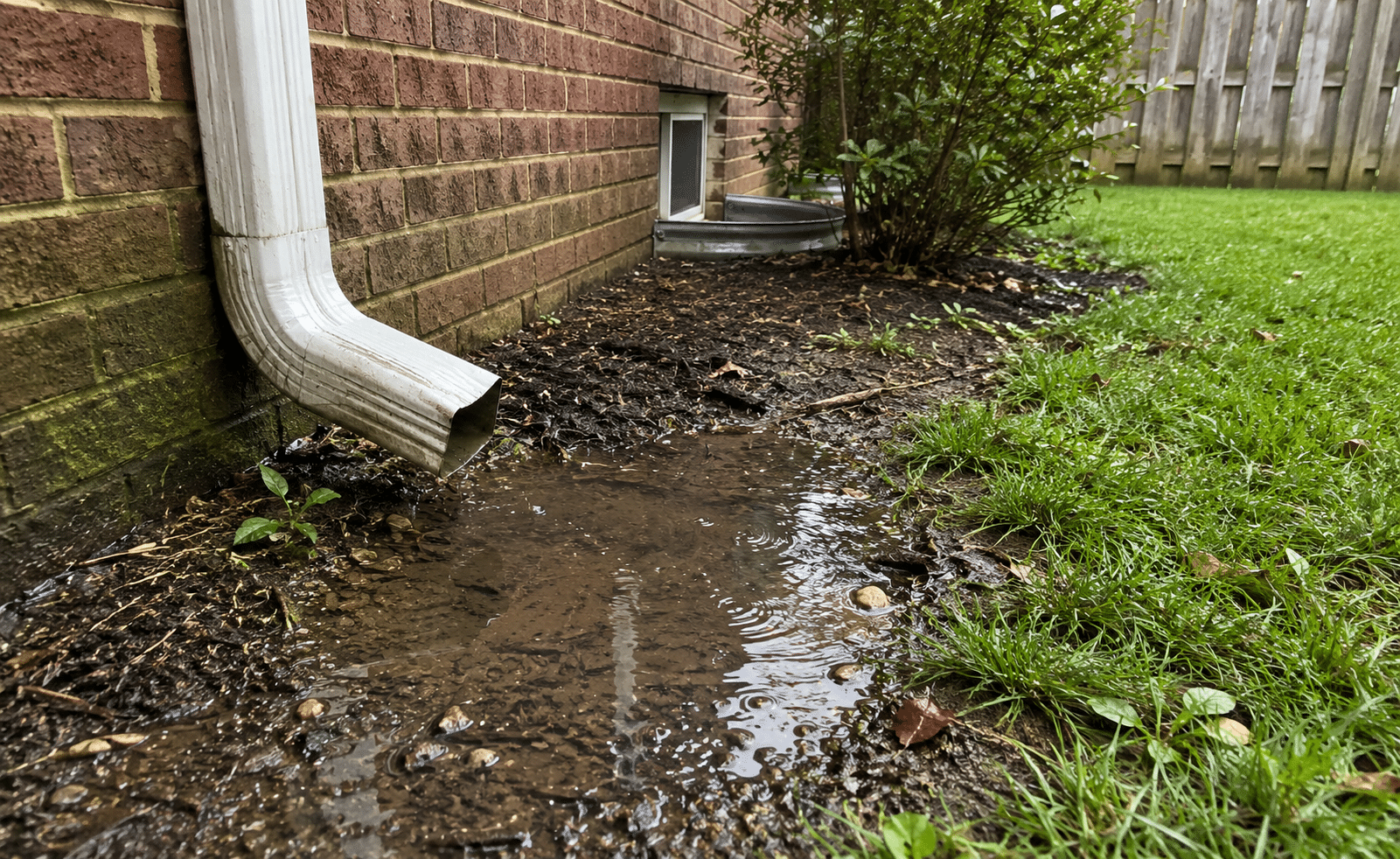
Moisture around the home plays a key role in attracting both termites and mosquitoes. During spring and early summer in Maryland, increased rainfall and humidity can create conditions that support pest activity.
Understanding how moisture and drainage influence these pests helps homeowners recognize areas that may need attention.
Why Moisture Matters
Both termites and mosquitoes rely on moisture, but in different ways.
Moisture can:
• Soften wood and soil conditions for termites
• Create breeding areas for mosquitoes
• Support environments where pests can thrive
Managing moisture helps reduce conditions that may attract both.
According to the National Pest Management Association, excess moisture around a home is one of the most common factors contributing to pest activity.
Where Moisture Builds Up Around the Home
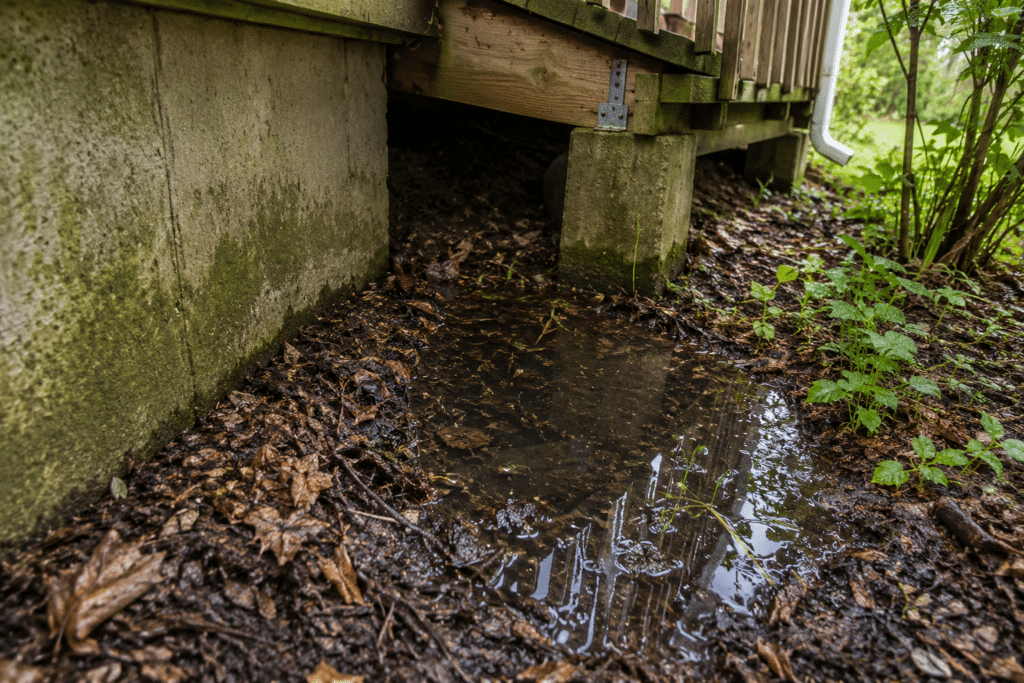
Moisture can accumulate in several common areas.
Inspectors often observe:
• Poor drainage near the foundation
• Standing water in low areas
• Damp crawlspaces
• Overwatered landscaping
These areas can contribute to both termite activity and mosquito presence.
Termites and Moisture Conditions
Subterranean termites are closely tied to moisture.
They are often found:
• In soil near the foundation
• In areas with consistent moisture
• Around wood that is in contact with damp surfaces
Reducing moisture helps limit favorable conditions for termites.
Mosquito Breeding Conditions
Mosquitoes require standing water to reproduce.
Common breeding areas include:
• Pooled water in yards
• Clogged gutters
• Containers holding water
• Low spots that retain rainwater
Even small amounts of water can support mosquito activity.
Drainage and Water Movement
Proper drainage helps reduce moisture buildup.
Important factors include:
• Downspouts directing water away from the home
• Grading that slopes away from the foundation
• Maintaining clear drainage paths
These conditions help limit both termite and mosquito activity.
Signs to Watch For
Homeowners may notice conditions that indicate moisture problems.
These include:
• Damp soil near the foundation
• Persistent standing water
• Increased insect activity around the home
• Musty odors in crawlspaces or basements
These signs can help identify areas needing attention.
When to Consider an Inspection
If moisture related conditions are present, an inspection can help provide clarity.
An inspection may evaluate:
• Areas conducive to termite activity
• Moisture conditions around the structure
• Factors contributing to pest presence
This helps homeowners better understand what may be occurring.
As discussed in our article on What Swarm Activity Means for Your Home, environmental conditions can play a role in pest behavior and visibility.
Supporting Long Term Prevention
Managing moisture and improving drainage are key steps in reducing conditions that attract pests.
Routine maintenance and awareness of how water moves around the home can help support long term protection.

