
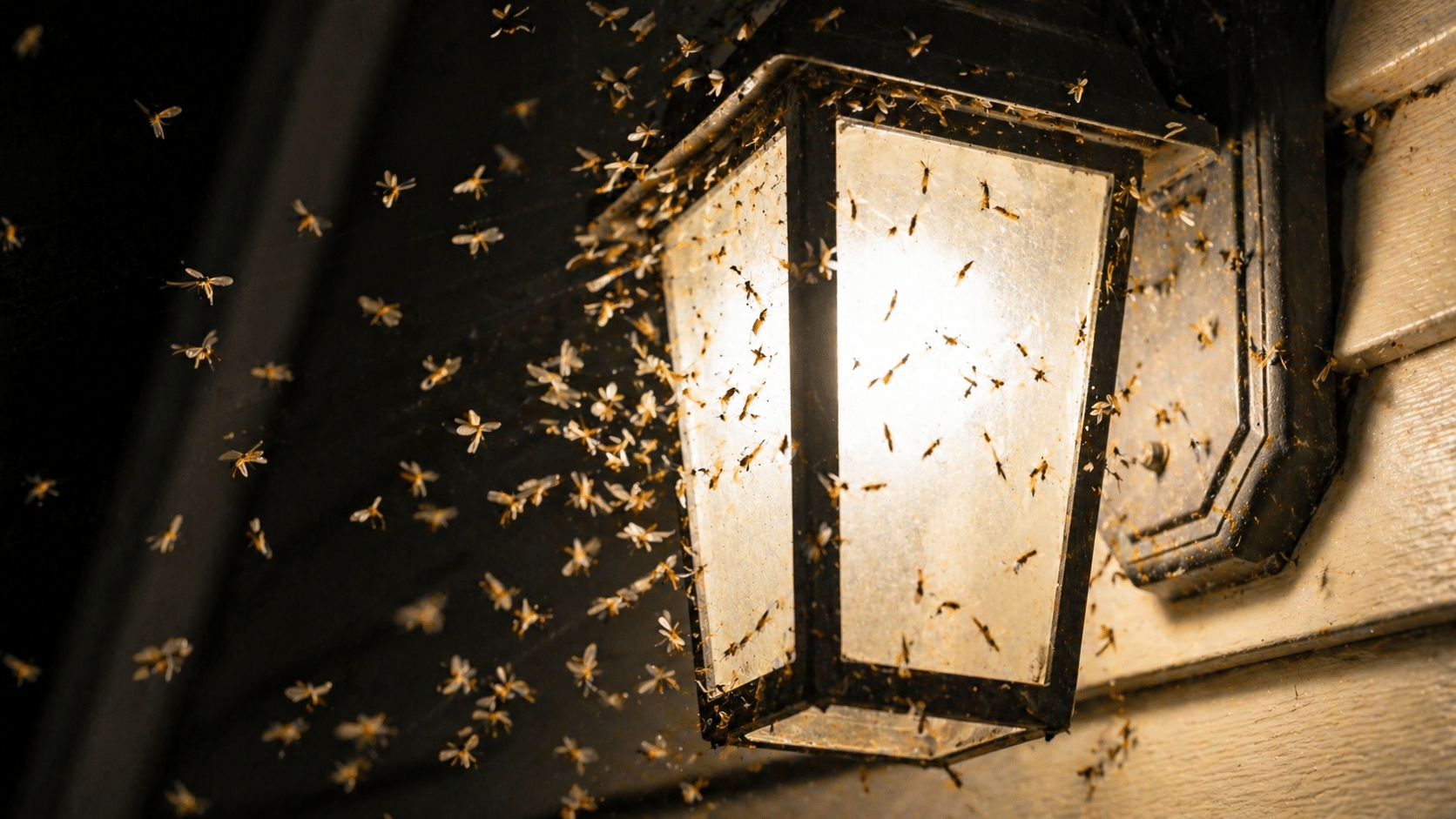
Spring often brings increased termite swarm activity across Maryland. Homeowners may notice flying insects or discarded wings near windows, doors, or foundation areas and wonder what it means.
Understanding swarm activity can provide clarity and help determine when further evaluation may be worthwhile.
What Swarming Indicates
Swarming is a natural part of the termite life cycle. It occurs when a colony matures and reproductive termites leave to establish new colonies.
Swarmers emerge to:
• Reproduce
• Expand colonies
• Seek new nesting locations
According to National Pest Management Association, spring swarming is a normal part of termite colony development and an important sign homeowners should recognize.
External Reference:
https://www.pestworld.org/pest-guide/termites/
Where Swarm Activity May Be Seen
Swarmers may be noticed:
• Near windows and doors
• Around light sources
• Along foundation walls
• On exterior siding or porches
In some cases, activity may be observed indoors.
Discarded Wings as a Sign
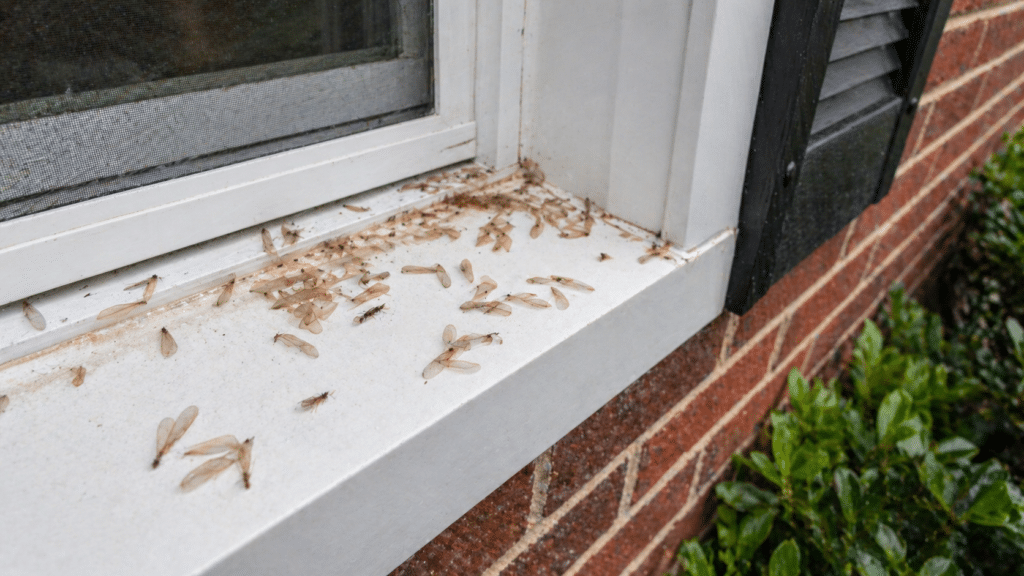
After swarming, termites often shed their wings.
Homeowners may notice:
• Wings on windowsills
• Wings near baseboards
• Small piles of identical wings in one area
Sometimes discarded wings are more noticeable than the swarmers themselves.
Does Swarming Mean Damage
Seeing swarmers does not automatically mean structural damage is present.
It may indicate:
• A nearby outdoor colony
• Activity beneath or around the home
• Conditions favorable for termites
Proper identification is important before drawing conclusions.
Indoor vs Outdoor Swarms
Location matters.
Outdoor swarms may suggest nearby environmental activity.
Indoor swarms may warrant closer attention, as they can sometimes indicate activity associated with the structure.
Conditions That Can Attract Termites
Certain conditions may support termite activity.
These can include:
• Excess moisture near the home
• Wood to soil contact
• Areas with poor drainage
• Accessible wood materials in crawlspaces or basements
Managing these conditions may help reduce risk.
When an Inspection Makes Sense
If swarm activity is observed, a termite inspection can help provide clarity.
An inspection can help evaluate:
• Signs of current or past activity
• Conditions conducive to termites
• Whether additional action may be recommended
Correct identification matters, especially when distinguishing swarmers from other insects, as discussed in our article on Flying Ants vs Termites Differences.
Seasonal Awareness Matters
Spring swarming is a normal part of termite behavior, but awareness is valuable.
Recognizing the signs of swarm activity can help homeowners respond appropriately and avoid assumptions.
Supporting Long Term Protection
Understanding swarm behavior is part of protecting a home over time.
Monitoring conditions around the structure and responding to signs early can support long term protection and peace of mind.

