
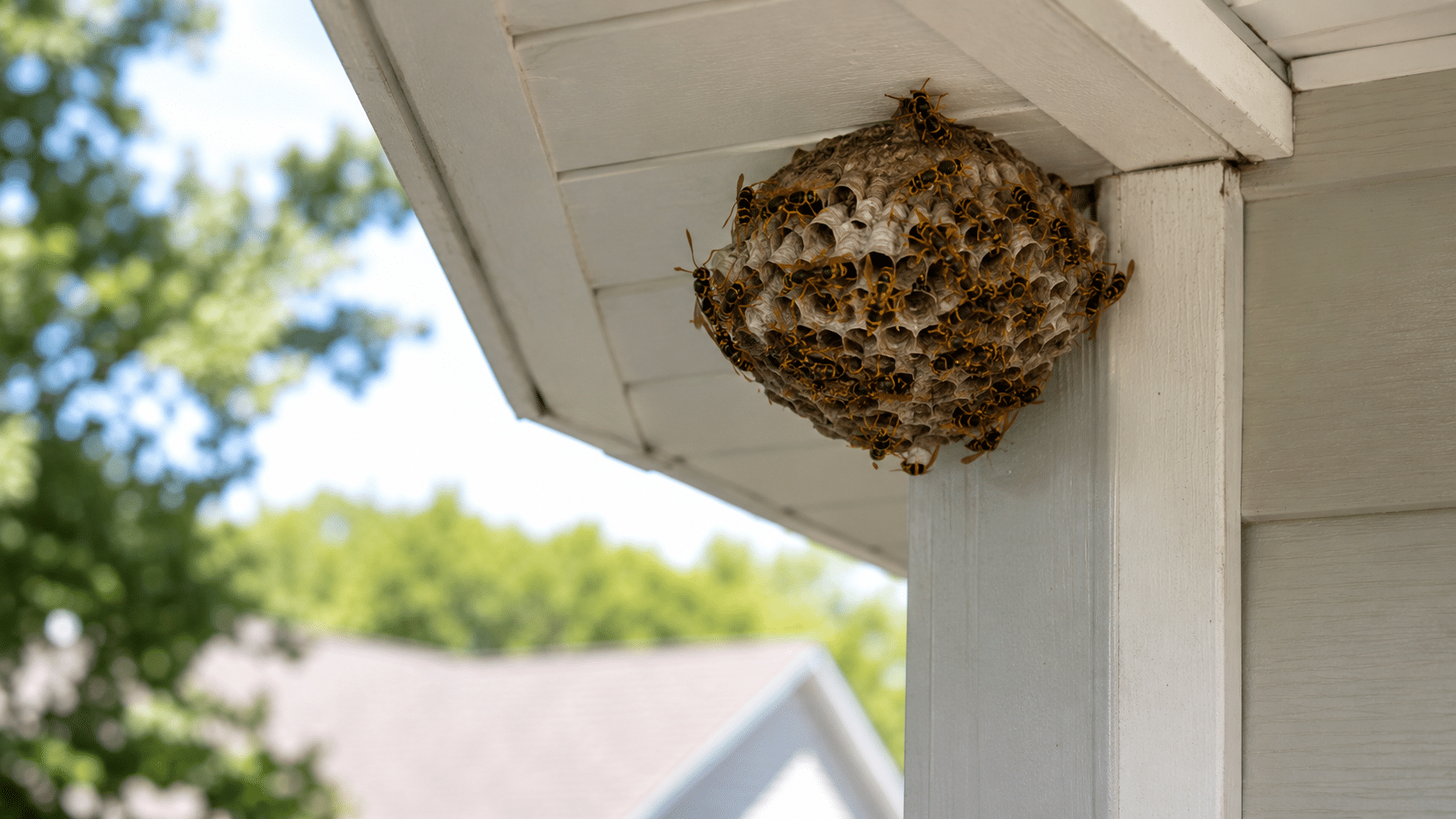
By mid-July, stinging insect colonies across Maryland have had a full spring and early summer to grow, and activity tends to peak right around this point in the season. Bees, wasps, and hornets that seemed manageable a few months ago can now have well-established nests, which makes midsummer a common time for homeowners to notice a sudden uptick in activity around decks, eaves, and yards.
Why It Matters
Stinging insects serve an important role outdoors, but nests built too close to high-traffic areas of a home create a real risk, particularly for anyone with an allergy. Beyond the safety concern, mature nests are also harder and more dangerous to remove than they would have been earlier in the season. Understanding what’s typically active this time of year, and what draws these insects toward a home in the first place, helps homeowners address a developing problem before it becomes a larger one.
What Technicians Evaluate
When assessing stinging insect activity around a property in midsummer, a technician typically looks at:
- Eave and roofline activity, where paper wasps commonly build open nests
- Ground-level nests, often built by yellow jackets in old rodent burrows or under sheds
- Wood structures and siding gaps, which can attract carpenter bees
- Food and moisture sources, including trash areas, fallen fruit, and standing water
- Existing nest size and location relative to entryways, patios, and play areas
Paper Wasps and Eave Activity
Paper wasps build open, umbrella-shaped nests, often tucked under eaves, deck railings, or porch ceilings. By midsummer these nests have grown considerably from their spring size, and a nest that was easy to miss in May is often clearly visible by July. Technicians look closely at rooflines and any overhangs where wasps have easy access to a sheltered surface.
Yellow Jackets and Ground Nests
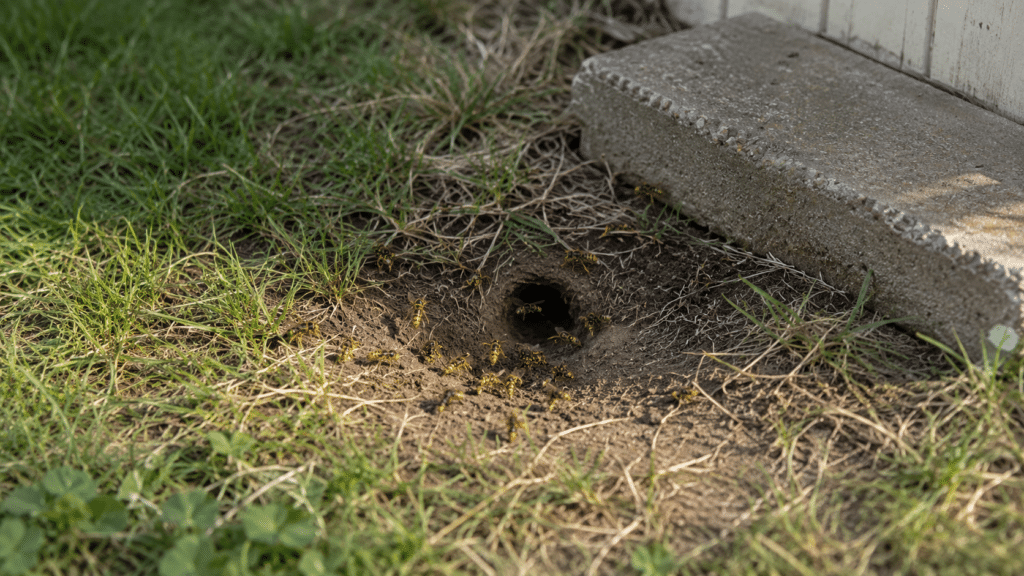
Unlike paper wasps, yellow jackets frequently nest underground, taking over abandoned rodent burrows or gaps beneath sheds and patios. These nests can be harder to spot until activity is well underway, and ground nests are often discovered when someone accidentally disturbs the entrance while mowing or gardening. A sudden pattern of insects flying in and out of a single ground-level spot is usually a sign worth taking seriously.
Carpenter Bees and Wood Structures
Carpenter bees drill clean, round holes into untreated or weathered wood, including deck railings, fascia boards, and outdoor furniture. While they’re generally less aggressive than wasps, repeated activity over multiple seasons can cause real structural wear to wood components over time.
Seasonal Considerations
Midsummer is typically the point of peak colony size for most stinging insects common to the Chesapeake region. According to the National Pest Management Association, stinging insect activity generally increases through the summer as colonies mature, with late summer representing the height of aggression as colonies work to protect food sources and growing nest populations. This tracks with what our technicians see locally: a nest that seemed minor in May or June is often significantly more active by the time July’s heat sets in.
Moisture and debris around a property also continue to play a role in attracting a range of pests during this stretch of summer, not just stinging insects. Our recent post on crawlspace moisture and outdoor conditions covers how standing water and organic debris create favorable conditions for pest activity more broadly, which is worth a look for anyone dealing with more than one type of pest this season.
When Further Evaluation Is Recommended
A few situations call for a closer look from a licensed pest control technician rather than a homeowner attempting removal:
- A nest larger than a baseball, or one that’s grown noticeably over a few weeks
- Ground-level nests, which are often more aggressive when disturbed
- Nests located near doors, walkways, or areas where children or pets spend time
- Any household member with a known allergy to stings
- Repeated activity in the same area year after year, which may point to a recurring nesting spot
Supporting Long-Term Maintenance and Prevention
A few consistent habits make a property less appealing to stinging insects throughout the rest of the season. Keeping trash cans sealed and away from entryways removes an easy food source. Trimming back shrubs and tree limbs near the home reduces sheltered nesting spots. Sealing gaps in siding, fascia, and soffits closes off potential entry points before insects establish themselves there. Removing fallen fruit promptly and addressing standing water also helps, since both attract a range of pests beyond just wasps and bees. Checking eaves, sheds, and ground-level areas periodically through the rest of the summer makes it much easier to catch a new nest while it’s still small and manageable.

