
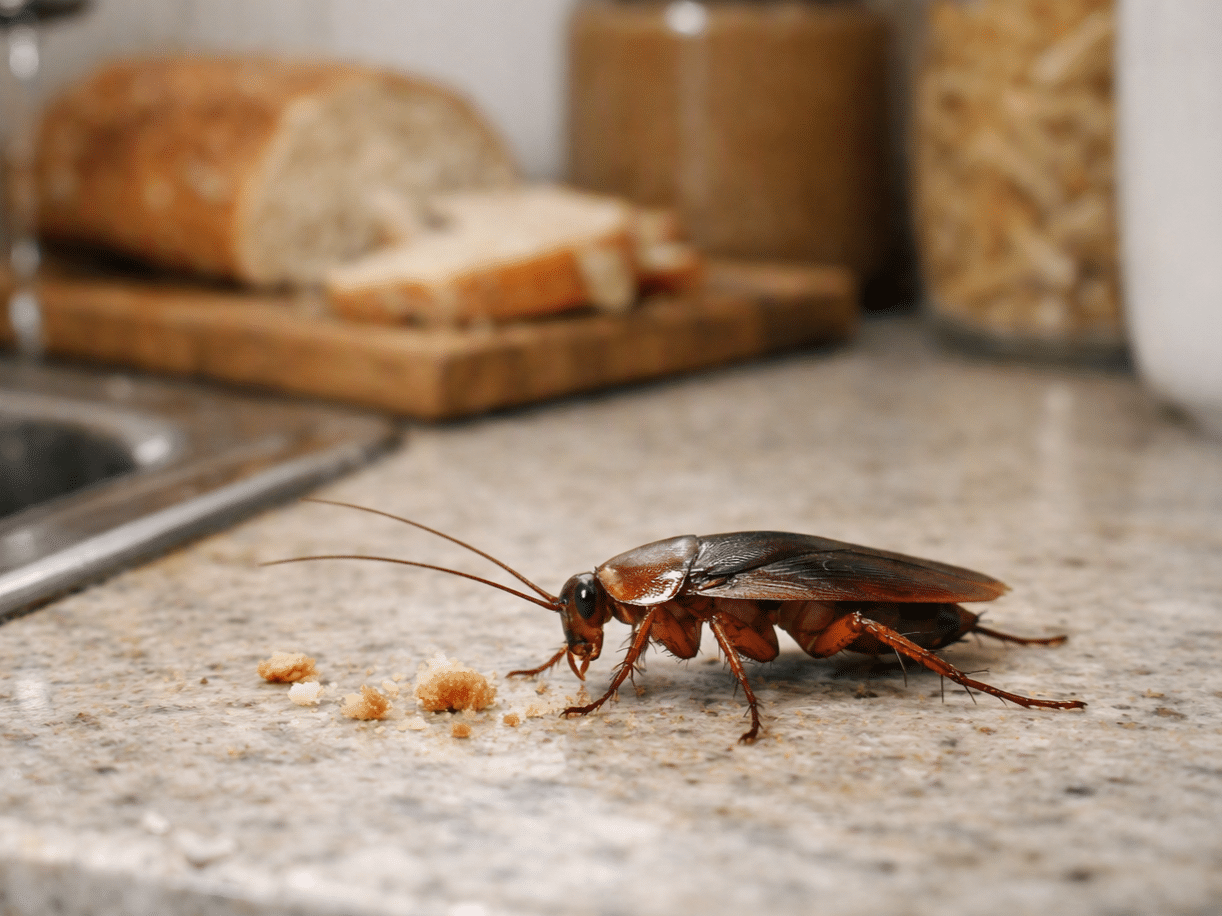
Late summer’s combination of heat and humidity creates ideal conditions for cockroach activity in and around Maryland homes. As outdoor temperatures climb, cockroaches often move indoors in search of the food, moisture, and shelter that kitchens and bathrooms readily provide. This time of year, technicians commonly see an uptick in cockroach-related calls as these conditions peak.
Why It Matters
Cockroaches are more than a nuisance. They can contaminate food surfaces and contribute to indoor allergens that affect air quality, particularly for households with children or anyone sensitive to allergens. Because cockroaches reproduce quickly and hide in hard-to-reach areas, a small presence can grow into a larger infestation within a matter of weeks if the conditions that attracted them aren’t addressed.
What Technicians Evaluate
When assessing cockroach activity in late summer, a technician typically looks at:
- Kitchen and bathroom moisture sources, including leaks under sinks and around appliances
- Food storage practices, checking for accessible crumbs, spills, or open containers
- Entry points, such as gaps around pipes, baseboards, and door thresholds
- Dark, undisturbed areas, including under appliances and inside cabinets
- Signs of activity, including droppings, egg cases, and a musty odor in heavily affected areas
Moisture and Food Sources
Cockroaches are drawn to moisture as much as food. A dripping faucet, a leaky pipe under a sink, or condensation around an appliance can be enough to sustain a population, even in an otherwise clean kitchen. Technicians check these areas closely, since addressing a moisture source is often as important as addressing the cockroaches themselves.
Entry Points Around the Home
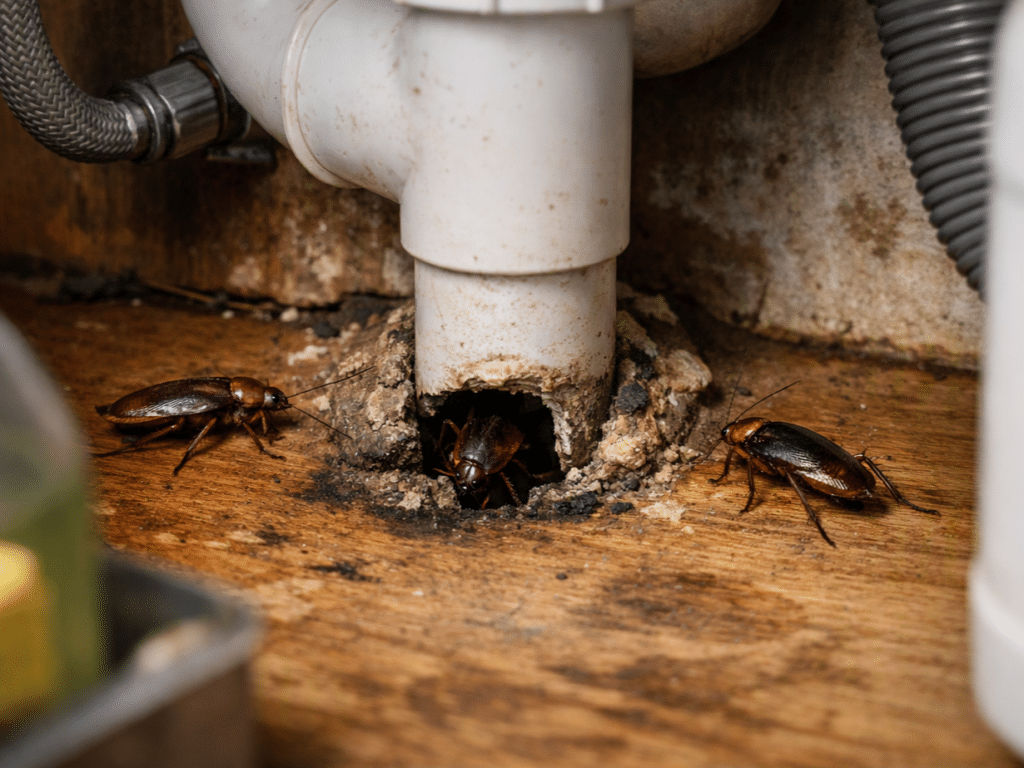
Cockroaches can fit through remarkably small gaps, often entering through spaces around plumbing penetrations, loose baseboards, or gaps beneath doors. Technicians look for these entry points during an inspection, since sealing them is one of the more effective long-term steps a homeowner can take.
Signs of an Active Infestation
Droppings resembling small black pepper flecks, egg cases tucked into cracks and crevices, and a persistent musty odor are common signs of an established cockroach presence. Because cockroaches are largely nocturnal, seeing them during the day, especially in larger numbers, often signals a population that has already grown significant.
Seasonal Considerations
Maryland’s late-summer heat and humidity create conditions that closely match a cockroach’s preferred environment, which is why activity tends to peak this time of year. According to the CDC, cockroaches and other pests are commonly found where food is eaten and crumbs are left behind, and their presence is a recognized asthma trigger, which is worth keeping in mind for households with young children or family members with respiratory sensitivities.
Moisture control plays a central role in managing cockroach activity, much like it does with several other common pests. Our earlier post on how moisture conditions support pest activity covers this connection in more detail, and the same principles that help prevent termites and mosquitoes apply here as well.
When Further Evaluation Is Recommended
A few signs point to a need for professional treatment rather than DIY methods alone:
- Cockroach sightings during daylight hours, especially in higher numbers
- Egg cases found in multiple locations around the home
- A persistent musty odor in kitchens, bathrooms, or utility areas
- Activity that continues despite regular cleaning and store-bought traps
- Any household member experiencing new or worsening allergy or asthma symptoms
None of these signs necessarily mean a full-scale infestation. In many cases, a technician can identify the source and address it with a targeted treatment plan.
Supporting Long-Term Maintenance and Prevention
A few consistent habits go a long way toward keeping cockroaches out for good. Fixing leaks promptly, including small drips under sinks and around appliances, removes a key water source. Storing food in sealed containers and wiping down counters after meals reduces access to an easy food supply. Sealing visible gaps around pipes, baseboards, and door thresholds closes off common entry points. Taking out the trash regularly and keeping it in a sealed container also helps, since exposed garbage is one of the more attractive food sources cockroaches seek out. A consistent routine of these habits makes a home far less appealing to cockroaches, even during the peak of late-summer heat.

